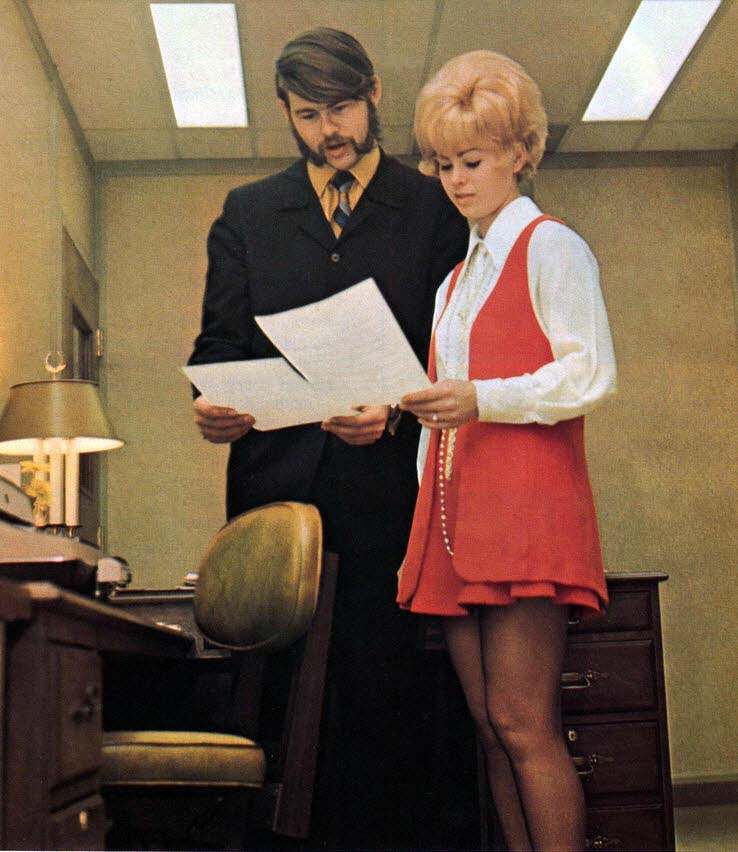

In the successful TV Serial Life on Mars the lead actor is a police detective who finds himself mysteriously propelled back in time to combat crimes in the 1970s. We, the viewer, are amused by the archaic cars and dreadful fashions but also cringe at the non-PC language, swearing and cigarette use. Was it really like that back then? Could those days return? Could we see all buildings in England and Wales controlled by Council building inspectors or will Approved Inspectors become “Building Approvers”?
But, let’s start at the very beginning, A very good place to start.

Back in the 70’s I was fresh out of University and landed a job as a trainee Building Inspector at a Local Authority. It was not my ambition to work there but needs must and I had to pay rent and expenses; That Austin Allegro was not going to fill itself and I had a hankering for a Van der Plas. I got on with the team in the office but initially, as the trainee, I was generally given the mundane tasks and treated as a tea boy. In retribution I regularly smoked a short stubby cigar just to wind up my supervisor who hated the smell but was powerless about the prevailing smoking culture. We as a group drank (often heavily) at lunchtimes and then drove home without a care in the world. Sometimes the alcohol and smoking combined to create a ‘Bonanza-like” opening scene as a large A1 plan (conveniently large to sleep behind) burst into flames due to proximity to the ashtray.

Many of the senior surveyors had served in WWII and the discipline that demanded still persisted… in the form of civilised approach and keeping up traditions such as still hankering for the 1936 Building Act and wearing cardigans. They were, nevertheless, consummate professionals and fully able to adapt to new building practices with a stiff upper lip – if anyone listened.
Many of them leant back on their chairs puffing on briar pipes clutching scale rules and murmuring as another project came under scrutiny. Sometimes on a day when the shag was being stuffed in pipes like the Flying Scotsman stokers it was hard to see the other side of the office through the fug.
Pirelli calendars abounded on the walls along with plenty of sexist comments about the new administrative assistant. The language was from the gutter, coarse and if you complained about any behaviour or were different you were targeted. Bullying? Yes, probably. Most of it was good humoured banter but I’m sure many suffered from the environment. It was a different age. Think of phrases involving “Mrs Slocombe and her pussy” combined with Jim Davidson jokes and you get the picture.
The prevailing attitude and culture regarding the job on site was jocular but one of enforcement – in and out of the office. Everyone was basically trying to find out everything wrong on a drawing and then hammer out a long list. On site I have personally witnessed a colleague kicking over a wall where he was personally unhappy with the quality. Rip that out. Down another foot. Nobody complained. Building Control back then was like the building police. Our word was law. No quarter was given. If they had armed us it would have been welcomed by many in the office and not a minute too soon.
That said, I learnt my trade back then. I knew building construction better than any textbook. I could quote regulations verbatim. I salute those who taught me and eventually let me out on site on my own. That could be a blog in it’s own right.
Then came the 1980’s.
Microsoft Powerpoint.
Miners Protests.
Money.
Power.
In 1985 the profession witnessed a sea change through the introduction of a new set of Regulations but worst of all… private building control. These private sector guys were the enemy. They didn’t have to deal with all the bad jobs – they could pick their clients. They could choose their glitzy projects and set astronomic fees. All of them drove Aston Martins and lived in penthouses. Well, maybe. Valiantly we tried to defend our position as the Local Authority but in the end we just copied them if we could.
Remember the hot hatches bombing from site to site? Were you one of that new breed of besuited men (no women of any number yet existed in the profession) flipping their Motorolas to check in to the office? They were heady times – and that was just the public sector. Some of us arrived at the council car park in sports cars and you could see the Labour party card-carrying gate staff going slightly purple. In council chambers throughout the land Directors of Planning had to report an upsurge in income though something called “Building Control fees” which increased each March by 7% with a nod of councillor’s heads. Some Local Authorities sponsored local football teams. Others refitted their offices and got a coffee machine for reception. Such adventures ended of course as soon as any progressive Head of Building Control left for a larger Authority or the private sector as inevitably a more sober-minded planner would take charge, savage the existing workforce and tear up those promotional leaflets in a huff.
The long lists of issues we raised against architects stopped and was replaced with a “conditional approval” – everything was good except for a few details. We were a “cost centre” and met with the Finance Department to try and reduce huge overheads by other departments that we had to carry without question. “No, you couldn’t outsource your IT.” said our accounts manager. “No, you can’t move to cheaper offices.”
Over time we sharpened up our act and also changed our approach to developers, seeking to win them over with our local knowledge and willingness to assist. “We work very closely with the planners who are looking at your scheme at the moment”. That was a common phrase used and as a blackmail tactic worked to a degree then and is still employed now by some LAs. Many developers used us out of sympathy, giving something back locally. Very noble – and again that is often the reason why many major schemes rest with the Local Authority.

What this new competition meant though back then was that whatever the political leaning of the Council we had no choice but to polish up our act, push ourselves more and emphasise internally that a post lost to cutbacks meant less income. Those councils who followed this entrepreneurial route lead successful organisations. We started to have professional business cards, promotional giveaways… handing out flags and banners on key sites to promote our offering. Some of us even got the train and visited developers at their offices (and then had to work out how to claim that cost back). LABC started up around this time and played a role in helping us to win over housing developers as we could now offer a warranty. This helped enormously and we held back the NHBC onslaught particularly well. Win – win.
Staff flip-flopped between public and private sector and that was a good thing. Both sides knew their strengths and weaknesses. Both sides flourished in different ways. Work would ebb and flow but the general professionalism of both sectors increased. Fees gradually escalated and the service across the board got better. Competition does that.
At some point the IBC – Institute of Building Control – was absorbed by the RICS and with it a degree of one voice for the profession disappeared. CABE – or IAAS as it was known back then, like the RICS, had members from other surveying professions, so again was not specialised enough. Being all things to all men made it less focussed on a single profession – not a criticism – quite natural really.

That uneasy truce lasted for a total of three decades. The private sector Approved Inspectors grew in number to a natural point and the Local Authorities gradually stabilised until the market became mature and on an even keel. An occasional spat would break out as an LA would throw out an Initial Notice for a spurious reason (“work’s have commenced – we checked on site”) or an objection to an Initial Notice would be returned later than 5 days. These were isolated and simply part and parcel of the landscape we all worked in. We got on with the job.
In Part 2 we look at how the fraternisation stopped, the ball was popped and the war kicked off again.
Please register to receive an update when part two of this blog is available.
Please share widely 🙂
 The Secret Building Inspector